Data at the speed
of reality.
Collatz is the mathematical intelligence backbone of Zylvex. It converts the massive high-frequency telemetry streams produced by Eagle Rock physical tests into compact, meaningful engineering intelligence — then feeds that intelligence back into ZylForge to improve every future design.
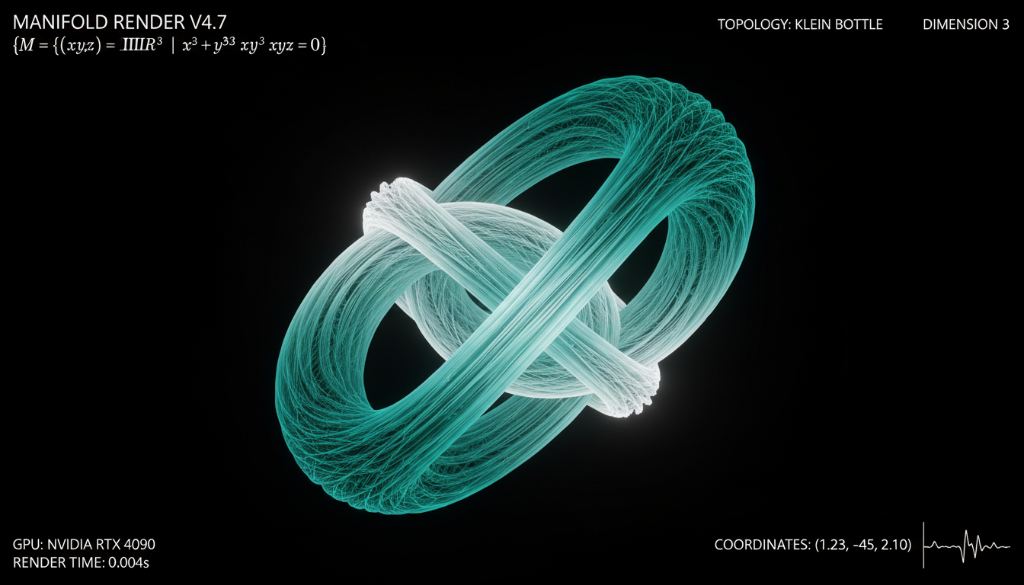 Collatz 64-Bit GPU Iteration Manifold Rendering
Rocket testing drowns in its own data.
A 10-second static fire test at Eagle Rock generates 12.4 million sensor samples across five channels. That volume cannot be reviewed, stored cheaply, or compared with historical runs at human speed.
Without intelligence, data becomes noise. Collatz is the filter that turns noise into signal.
Before Collatz
12,400,000 samples · ~480 MB
After Collatz
14 dimensions · 97.8% reduction · 99.4% information preserved
Six layers of intelligence.
Stream Ingestion
Simultaneous multi-channel ingest at 36,000 aggregate samples/sec from Eagle Rock test stands and CNC machines.
State Compression
12.4M raw samples → 14 engineering dimensions. 97.8% size reduction while preserving 99.4% diagnostic information.
Pattern Discovery
Cross-channel correlation analysis surfaces failure precursors invisible in single-channel views — confidence up to 94%.
Anomaly Detection
Real-time threshold monitoring and statistical deviation scoring raises alerts before component failure.
Reality Diff Enhancement
Adds historical trend context to Harmonia XR diffs: not just current deviation, but whether error is growing over time.
Learning Feedback
Packages discovered insights as KnowledgeTransfer records and dispatches them to ZylForge constraint models.
Patterns invisible to humans.
A single channel cannot reveal a failure precursor. Three channels together can. Collatz scans cross-channel correlation signatures against the Pattern Library — a growing registry of discovered engineering signatures built from every Eagle Rock test.
When vibration rises, temperature follows, and strain shifts microscopically — Collatz identifies bearing fatigue with 87% confidence, 4–18 minutes before failure onset.
Bearing Fatigue Precursor
Co-occurring vibration amplitude increase, temperature rise, and micro-strain shift. Historical precedent: 87% failure onset within 4–18 minutes.
Trigger Channels
Recommendation
Reduce spindle RPM by 12%. Schedule bearing inspection.
Reality Diff + Collatz Historical Context
AI insight: Stress model requires upward multiplier of 1.1167 for this geometry class.
Not just a diff. A trend.
Before Collatz, Harmonia XR could tell you the current deviation. After Collatz, it can tell you whether that deviation is growing, shrinking, or stable — across the full history of Eagle Rock tests for that component class.
The prediction: if this trend continues, the next test will show +14% stress deviation. ZylForge should be updated before that test runs.
Every test makes the next design better.
Collatz does not just analyse. It transfers. Each Knowledge Transfer record dispatched to ZylForge carries constraint multipliers, corrected material model parameters, and pattern library additions — so the next engineer who designs a similar component starts with a model already calibrated against physical reality.